Field notes
Claude vs Google Workspace: the plan I'd pay for and the apps I'd keep
· 21 min read
AI Rabbit Holes · Claude · Claude Duet · Claude Code · Fable · Google Workspace · AI Benchmarks
Claude has docs, sheets, slides, and whiteboards now. Who's canceling their Microsoft or their Google for these? I don't know anybody. In fact, you'd be stupid to, because you're just going to get locked deeper in their ecosystem.
I talked through the Claude ecosystem with Ryan Doser on AI Rabbit Holes, recorded November 12, 2026: Fable 5.2, which plan to pay for, the new whiteboards, docs, and sheets, Claude Duet, and where I do my real work. Our episodes go up on Ryan's YouTube channel. It follows our episode on picking an AI personal assistant, where Ryan first scratched the surface of his Duet setup.
Is Fable 5.2 worth it over Opus 5.5?
Watch this part of the episode (2:05)
The day after Fable 5.2 came out, I finally set some time aside with a little personal benchmark. I've never hit my rate limits on a Claude Max plan faster than this week. I hit the five-hour limit, and I had Codex watching in the terminal for when it lifted that night, to get these Claude threads rolling again. Within five minutes, I hit the five-hour limit again. I was like, all right, I'm just going to bed.
I was ripping on three things at once with Fable and pressure testing it. What I was trying to find out: is it worth using over Opus, and if so, for what?
Ryan's answer was no, for most tasks. He uses Fable for the super high-level things: making sure his skill markdown files and his AGENTS.md are dialed in, because those are the backbone and brains of his operation. He hates the term orchestration because it's overused, but he says it fits a model like Fable. You give it the high-level direction and let worker bees like Opus, Sonnet, and even Haiku figure out the grunt tasks in the background.
What's funny is when I used Fable that way and said, you can spec out subagents with the models you think they need and give them clear instructions, Fable used low-level models a lot. It didn't even spin up Opus threads. It was usually like, Haiku can handle this, Sonnet can handle this. I was really surprised it wasn't like, I need more Fable threads to eat up your rate limits.
Is a Claude subscription worth it?
Watch this part of the episode (3:59)
Should you have a Claude subscription? There are all these new things flying at us. In the last two weeks there were two major ones: Duet, and all the new artifacts that came out the day before we recorded. Most of us started with Claude in a terminal. Everybody was like, you've got to use Claude Code in your terminal. I don't use it that way anymore, but I still pay for it.
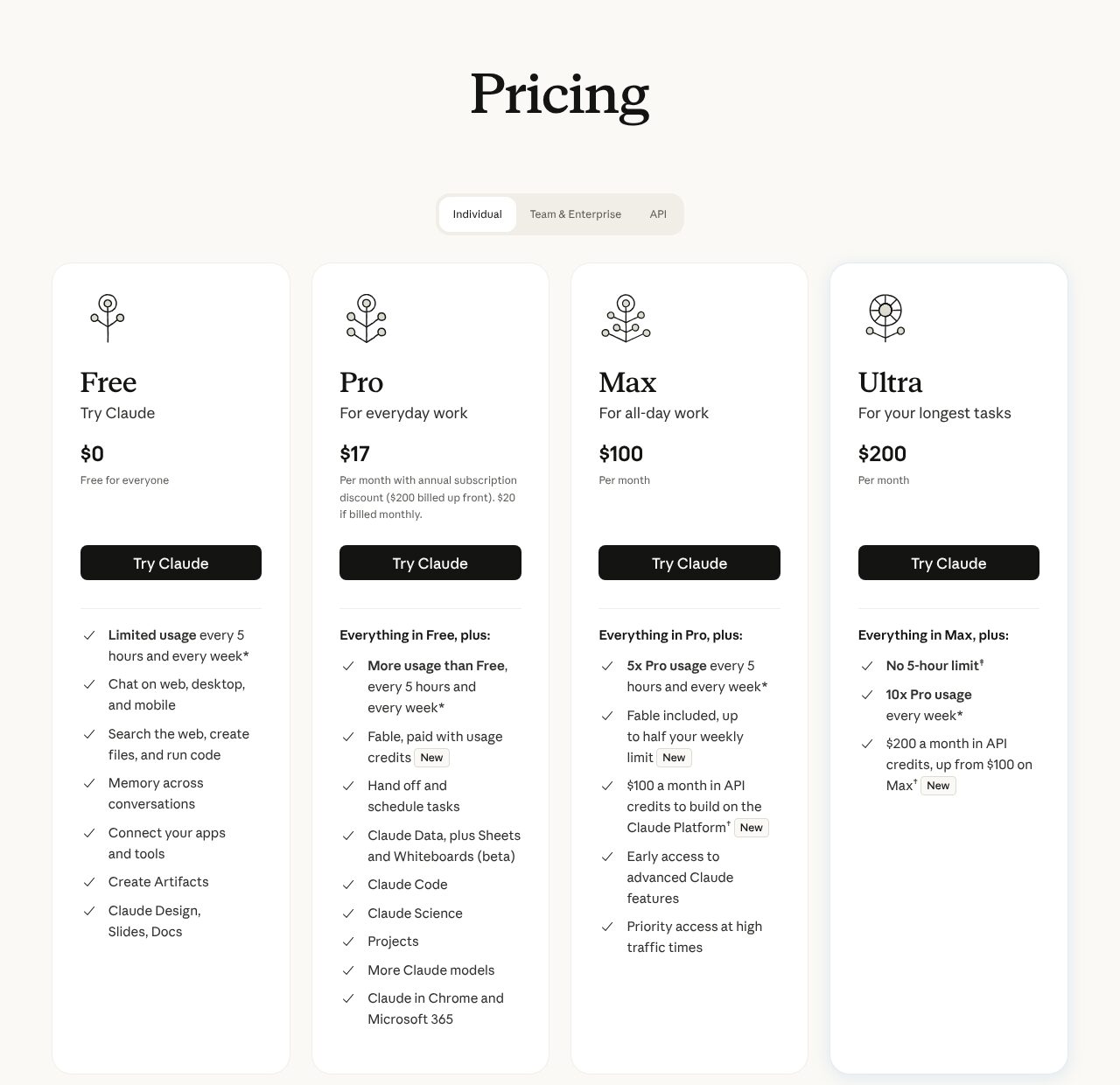
Ryan wouldn't tell someone who's all in on Google, OpenAI, or Microsoft to drop everything and move to Claude, because the opportunity cost doesn't make sense. For someone starting from scratch, he doesn't think Claude's $20 a month plan is worth it. You won't get much usage out of it for Fable, artifacts, and everything else. He thinks OpenAI has the best $20 subscription right now.
At $200 a month, though, he calls the Claude Ultra plan untouchable. He uses it every day: Opus 5.5 as his daily driver through Claude Code, slides for almost every episode of this podcast, and Claude Duet for automations.
My answer first is don't put all your eggs in one basket. If you're stuck in Google or stuck in OpenAI, you're going down a bad road. It's just a matter of time.
I think the best thing Claude brings is the top-level models for things like coding and design. I'm sorry, but OpenAI models are terrible at interface and video editing. Ironically, the image creation is awesome. But if you say make a good-looking landing page or design some slides, they're not even close to Sonnet level.
For consumers, average people, Meta Muse on free is as good as or better than a lot of the $20 and $30 plans from Grok Bot, OpenAI, and Claude. If you're the person who's like, chat, calendar, meeting notes, basic stuff, Muse is awesome, and you can probably use the free plan. I've been paying $16 a month and I can't even put a dent in the rate limits. It got a Chrome extension today, so it can take over your browser.
Claude Pro vs Max vs Ultra
Watch this part of the episode (5:17)
I don't know anybody who's paying for Google AI Ultra. The way they price their models behind a $100 paywall is insane to me, because people like Ryan and me go, I'm not going to pay that just to try a new model. They also have terrible naming conventions. Ryan tried Argon on his $20 Google AI Pro plan and was out in five prompts, locked out for the next few hours.
If you're doing a website, a codebase, deep work, you're using a lot of tokens, and there's no comparison. I tell people to get the $100 Claude plan. That's what I'm on. There's no extra multiple at $200. If you're hitting limits, which I only think you'd be doing if you're really cranking on Fable 5.2, you can always go up to $200 for a month and see. They don't price it where you get a higher multiple the further up the paywall you go.
So Meta Muse for most people most of the time, and for complex things, you can't beat Claude Max.
Is Claude coming for Google Workspace?
Watch this part of the episode (8:44)
Ryan has seen people on YouTube calling all of this Claude 2.0. His read, with Anthropic's IPO coming, is that they're coming after knowledge work. It's not just competing with OpenAI, xAI, or Meta. They're going after Google Workspace and the Microsoft ecosystem, the setups almost every person with a white-collar 9-to-5 job has used.
He says it sounds crazy given the moats Microsoft and Google have, but you never know. He also pointed out that Google is an investor in Anthropic, which is part of why he's bullish on Google in the long run.
Claude Whiteboards, Docs, and Sheets
Watch this part of the episode (10:02)
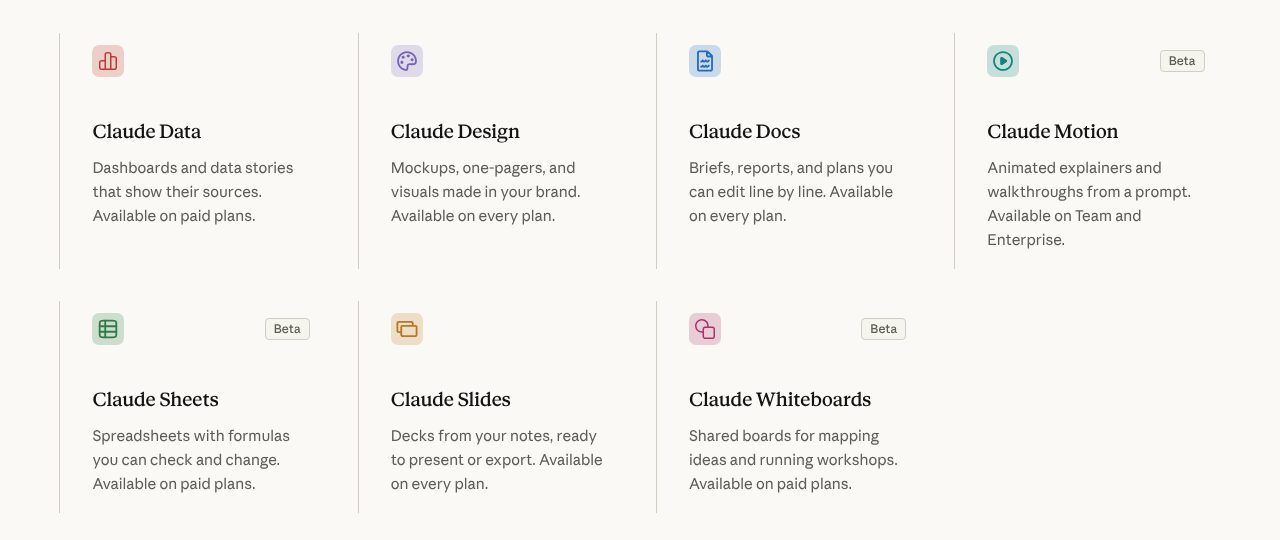
Claude has had artifacts for a long time. A lot of people have made dashboards and HTML explainers. I've done 3D models that you can explore, and it's just code. They've also had Claude Design, which used to be a standalone thing, kind of like a Figma or a Canva product. Now they're saying all these different file types and use cases are just in the artifacts.
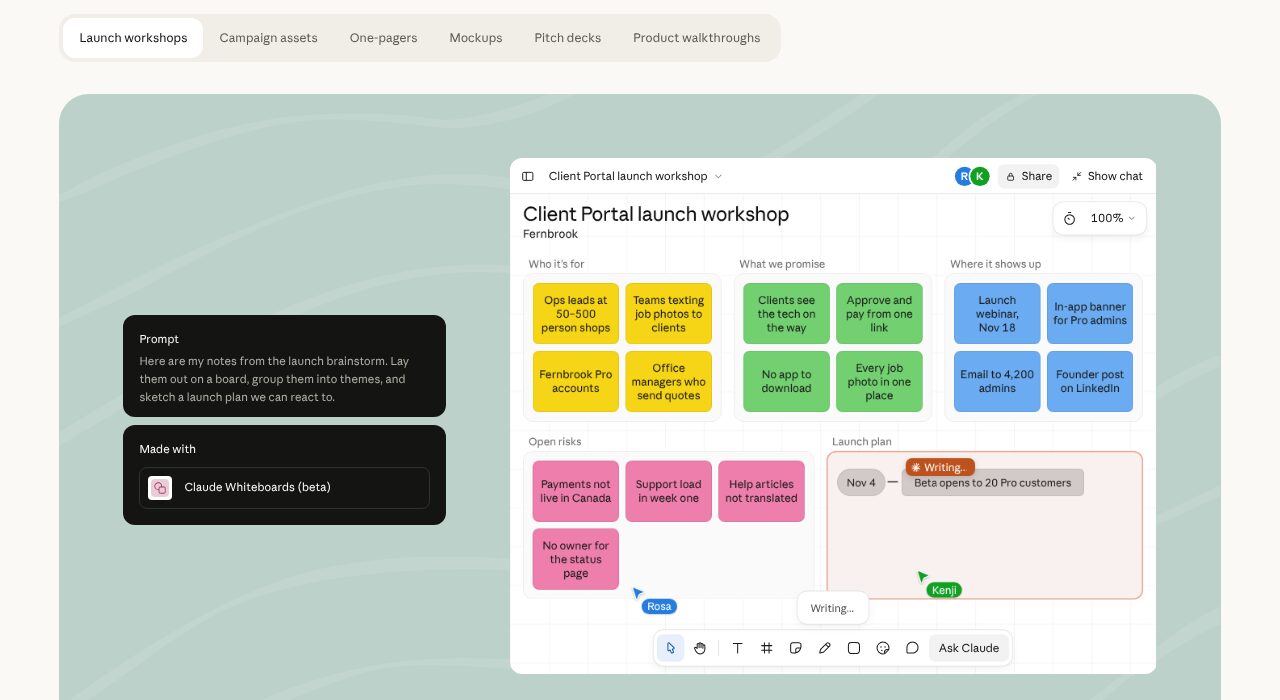
What's different about the whiteboard is you can leave a comment on it to Claude. If you're using FigJam, which is my favorite whiteboarding tool when I'm giving presentations, I could @mention Ryan if he worked with me. Here you leave a comment for your Claude agent, and it's basically going to say, Aaron wants me to do something, move something, explain it. Now you have a visual canvas to collaborate on. You also have the chat thread, if you want that interface.
While Ryan and I were talking, my board turned purple, because I'd left a comment on it, just like you would for a human teammate on a whiteboard. I had Claude set the board up. I didn't touch any of the boxes or the text. I said, find these logos.
Ryan's first thought was Miro: what's the point of that anymore?
Miro is a standalone subscription with seat-based pricing, not usage. A friend who used to work at Miro told me how it works, and the first time I heard it, I was like, you mean the Microsoft of whiteboards? $35 per person per seat, even if you don't use it. At most organizations, maybe 10% of people use it regularly. That's how they make their money. Ryan thinks enterprise software is such a joke that it could be its own episode.
Does Claude want to replace your apps?
Watch this part of the episode (12:39)
Here's my theory. Two years ago, all these labs were saying our newest models are so good, you can just vibe code your own internal tooling and replace all your subscriptions using Claude. Nobody did. No one got rid of Microsoft or Google for docs and slides. Nobody got rid of Notion.
People didn't know how, or the models weren't good enough, to replace your email, your design tool, your CRM. So what are the labs going to do? Build them into your subscription and say, Claude is not a chatbot. It's not just a coding agent. It's a whiteboard, it's a slide, it's a design tool. You don't need Figma. Look, we made our own.
But here's the difference. When I was hitting my rate limits on Fable, if I came in here and wanted to leave a comment on the board, my Claude agent couldn't do anything.
Ryan added that every action on a whiteboard or a slide, every edit, is using your usage behind the scenes. With the other SaaS tools, it's pretty much unlimited once you pay the monthly subscription.
Will Claude open its apps to other AI tools?
Watch this part of the episode (13:54)
Here's an irony for you. Who has pushed the idea that every app needs an MCP connector or an API? The labs: OpenAI, Anthropic, Google. Why? Because they want to take their tokens into your apps. Ryan pointed out that Anthropic pioneered MCP. They came up with it, including the skill format.
Figma has an MCP. tldraw and Miro do too. Guess who's never going to put an MCP connector in their whiteboard tool? Claude. They lock their ecosystem to their model and their subscription, but they want everybody else to open up to theirs.
It's the same thing with ChatGPT's meeting notes recording. I don't know anybody who uses it, because there's no MCP. Granola you can bring in anywhere. Wispr Flow and all these different tools have MCPs. ChatGPT, who benefits from that system, doesn't have one for their own tools.
So what they're really saying is, with your subscription you get this and this and this, so cancel all of those. But if you run out of tokens, to use a whiteboard with your agent, you're going to have to pay or move up to a higher tier.
We didn't innovate out of SaaS subscriptions ourselves, so they're like, OK, we'll just do it for you: a design tool, a whiteboard tool, a meeting note recorder. I'm surprised they don't have an email client, a Slack client, or a calendar, because those are the biggest parts of knowledge work for most people.
Ryan won't touch software if it doesn't have an MCP or an API. We record on Riverside, and he says if Riverside didn't have a working MCP, he probably wouldn't be using it. He knows we're in the minority. Most people at small, medium, and enterprise businesses are still logging into the web app, dragging and dropping, and copying and pasting.
You can't take your whiteboard out of Claude. I'm not saying it isn't cool. I've played with it and made a couple, and I'm a whiteboard person. I'm not entrusting any serious work to it, because there are already open source versions I can self-host, with connectors, that work across any subscription.
Should you switch from Google Docs to Claude?
Watch this part of the episode (16:22)
Another one is documents. A lot of people don't know both ChatGPT and Claude have their own version of documents, and they're very basic. Claude has Sheets now. I haven't even touched Sheets.
Ryan sees it as a matter of using both. He thinks it would be foolish for Anthropic to expect someone to drop their $20 a month Gmail subscription, their team plan, or their Microsoft plan and hop over to Anthropic's stuff.
Especially enterprise teams, because they know how often these programs get discontinued. Google kills apps more than most companies release new apps.
How Ryan tests a new model
Watch this part of the episode (18:13)
When a new model like Fable 5.2 comes out, people ask: is it worth subscribing for, is it worth using, I don't want to burn my rate limits. So I asked Ryan what he does first. Ryan runs every new model through the same few jobs:
- Landing page optimization. He has a lot of landing pages for digital products and his community on ryandoser.com. He has the model find what's wrong, fix it, and optimize it to drive more leads and sales. He says the Fable models do a pretty damn good job at landing page design.
- A cleanup slash command. It looks at most of the skills he uses often, his AGENTS.md, and anything in his VS Code workspace he no longer uses or could improve. His AGENTS.md runs both Claude Code and Codex. After Fable 5.2 went through it, it's 87 lines. At one point it was pushing 150 or 200, and he says a bloated one isn't as effective as a trimmed, concise one.
- An SEO audit slash command for AI search. He built it on Fable 5, updated it with Opus 5.5, and updated it again with Fable 5.2, because AI SEO changes almost every day.
For people listening and not watching: Ryan's a VS Code disciple. He likes the Claude extension in VS Code, which I haven't touched in a long time.
Build your own AI benchmark: the eye doctor test
Watch this part of the episode (22:16)
Ryan taught me to come up with my own benchmarks. He has a great one with landing pages on his channel, side by sides of the new model last week, the new model today, the Anthropic model, the OpenAI model. Ryan's take on most published benchmarks: every new model comes with gibberish numbers nobody explains, and he asks, who cares at that point?
I had a little personal benchmark, but I never had one for video, which is the thing Claude models have actually pulled ahead on. I'm telling you, anything visual, landing page design, UI design, video editing, it's on a different level. Even just Opus has been that way.
I have a skill that adds animations to vertical video. It isn't a deeply valuable one, but it's a really hard one to quantify. You can't just look at a graph and say this one's 83% and this one's 74%. So I had Fable build a test, and I ran it on 13 different models, including Fable 5.2. It gives me the eye doctor test. When you're at the eye doctor, they go A or B, which one's better, or can't tell the difference.
- I told Fable which subscriptions I have and which models I could get. It ran the same task with 13 different models and put the outputs in an artifact for me to go through and rate.
- I click through a blind test. I have no idea which model made which one. It doesn't tell me until the end.
- I go through about 20 of them, and it moves them up and down just like the eye doctor. If I say right is better, it reshuffles that one back in later against different model outputs. It has me go through them more than once, so it's not a knee-jerk, this one's the best and this one's the worst.
- I get a report at the end. Or if I want to cheat, I can go through and see which model made each one.
On the test I had Fable design for me, I rated Opus 5.5 higher than Fable 5.2. On my first run, right after Fable came out, Opus 5.5 did better than any model from OpenAI, SpaceX, GLM, or Anthropic. In the round I showed Ryan, Fable was winning so far and Haiku was doing the worst.
It's a blind test because we're biased. If you saw what the API usage for Fable would cost you, you'd start rating it higher. Otherwise you're like, whoa, why am I paying for this if it's not better than what Opus 5.5 did? Opus 5.5 has been out for a month, a month and a half, and a lot of us have been using it as our daily driver.
Code is code. I don't even care. I'm not a developer. If it works, it works. But for stuff where you have taste, have it do an eye doctor test. It could be landing pages, UI design, copywriting. If you're a marketer, it could be subject lines for email marketing. You rate them better, worse, or tied, and have it save, so when a new model comes out next week, you can run it against what Fable did and what Opus 5.5 did.
How Ryan uses Claude Duet for automations
Watch this part of the episode (24:56)
Ryan uses Claude Duet mostly on his phone, in the separate Duet app. Unless you're paying $100 or $200 a month, he says don't waste your time with it, because you'll run out of usage on the $20 plan trying to do anything meaningful.
He moved away from ChatGPT dots partly because of its one really long chat. He thinks Claude's models are better and the connectors are easier to integrate. Duet has groups and channels, which he says it got from Grok Bot, and he can tell it to move something to a channel and keep working there. His scheduled actions are sorted by channel:
- A weekly marketing report for a client. Duet updates the report from his connections and emails it to the client every Monday morning.
- A social media tracker refresh: a Google Sheet for every client and his own brand, tracking X, LinkedIn, TikTok, Instagram, and his email newsletter's subject lines, open rates, and click-through rates. For X, it logs each post's format, hook, and results, then looks for patterns to build better hooks. Duet took the initiative to create the sheet, through his Drive connection and scrapers like Apify and Firecrawl.
- A data breach alert at 6:42 every morning for a client whose niche is data breaches, so they need to be first to the punch. If there's a new one, it writes an article, publishes it on the client's site, and optimizes it to rank on Google and AI search.
- Digital PR, and bookkeeping like saving receipts to the right folders.
- Viral AI news memes. Twice a day it scans the news for what's trending, picks whichever popular meme template fits, and applies it. It took him two iterations to dial in.
Ryan knows he's not the average Claude user. If you don't know what to automate, he says to go to the Duet chat, especially if you've been in Claude for a while and it has your conversation history, and ask: based on everything you know about me and what I'm doing, give me five tasks you think I should have automated, and create scheduled actions for those.
Why use Claude Duet instead of Claude Code?
Watch this part of the episode (29:38)
So I asked Ryan: if somebody's been in the Claude ecosystem using chat, Cowork, or even Code, why move up a level and make Duet the thing you're logged into? My favorite way to use Duet is walking or driving, on voice. Their voice model is a ways from the frontier, but it's gotten way better than when it first came out.
Ryan says you can use both. But these automations run in the cloud, and as far as he understands, you can't easily set up automations that run in the cloud from Claude Code in a terminal. You could hook up cron jobs and run things locally.
There's a way to do anything, but his point is still valid. It's unnecessary friction. Why would you even open a terminal when it's as easy as saying do this every Monday, do this every morning at 6:30, and it's just done?
My biggest reason to use Duet is that it's proactive. Claude Code is not going to wake you up and say, this email came in, it looks important, want me to draft a reply? Claude Projects are not going to say, hey, you told the client you'd have a deliverable by five tonight, and it's not in your Google Drive yet, maybe you should block an hour to work on it.
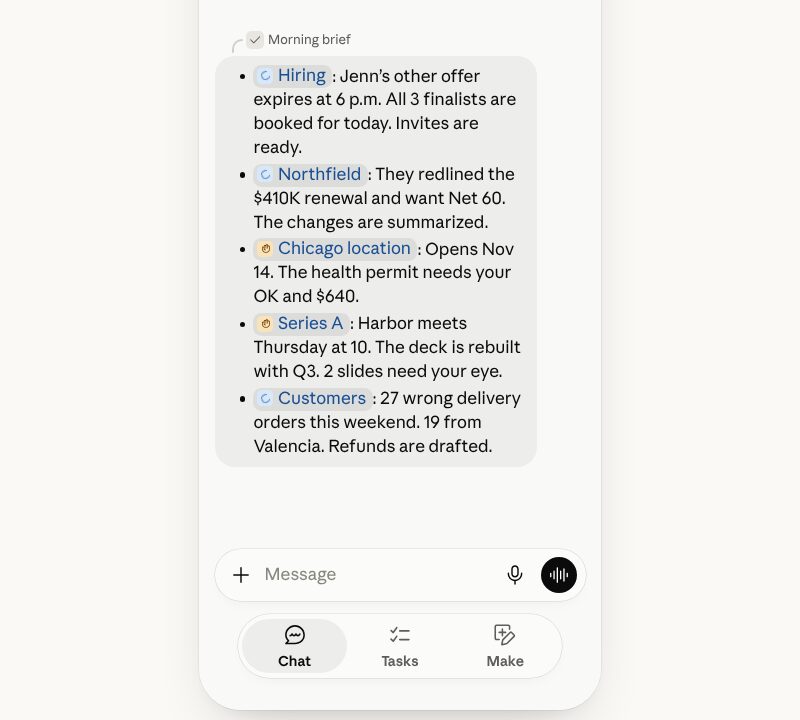
Duet has a prompt that's looking across all of your connectors and your data, which sounds scary, and let's be real, it is, because you're letting them see all of your work. What you get in exchange is proactivity you can't get in a terminal, or even in the desktop app with the other interfaces. The labs are clearly trying to move us toward using dots or Duet for everything.
Back up your automations before you get rug pulled
Watch this part of the episode (31:30)
Ryan has a Claude Duet daily log connected to a private GitHub repo. Every day it writes down what it did, what it learned, what went well, and what didn't, so it keeps building context.
He also set up a scheduled task health check, because as his scheduled actions piled up, he got worried. What if Duet goes away? What if the rate limits become unaffordable on the $200 plan, or the subsidized plans go away altogether? He didn't want to be stuck rebuilding 25 automations from scratch.
So every Monday, another automation saves all of them, in detail and step by step, to a second private GitHub repo. If he ever moves them to OpenAI, n8n, Make, or another platform with scheduled automations, he has everything he needs.
He says whenever you're working on stuff, ask yourself why you don't just create a private GitHub repo to back it all up, in case you have to move when you get rug pulled. I back up my own assistant setup the same way, which we covered in our GitHub for marketers episode.
Where Claude Duet falls short
Watch this part of the episode (33:25)
It's not there yet.
- You can't kick off a local thread. You can work with things in the cloud well, and you can kind of work with local things that have already started. You could always be at your desk, have something going on a machine, walk away, and use Remote Control. Now Duet can see that thread, prompt it, and keep it going while you're on a walk. But it can't start something new locally.
- The voice models are not there. Super slow and awkward when you're talking to it. At first it couldn't even take actions on a voice call. It'd be like, you have to hang up, then I'll read the transcript and do the thing. I was like, who shipped this? How is this in production? It's not that bad anymore.
- The mobile app is clunky. The little Duet animation at the top is so big it takes up a bunch of your screen, and it's a weird layout. I'm sure they'll polish it.
- If you're on an Enterprise or Team plan right now, you don't have it. I just talked to an enterprise team, and they can't even turn it on.
Ryan called that a little picky and said this is the worst Duet is ever going to be. That's what we said about Opus models. Ryan says every model comes out great, then gets nerfed, then the next one comes out and everyone drops everything to use it and hit their rate limits. Next it'll be Opus 6, then Fable 5.3. It's a continuous cycle.
Use Claude Code, not chat
Watch this part of the episode (36:06)
I haven't used Duet a ton lately. When I'm on desktop doing real work, which for me is web stuff, blogging, marketing, and video editing is huge, I'm in the Claude desktop app on Mac. I'm always in Code. I'm never in chat. I don't understand why you would be.
So here's the first challenge to you as a Claude user: if you're in this ecosystem, you should use Code, not chat. It's more powerful. It can do things on your computer, not just in the cloud. You don't have to be a coder. I'm not either.
Ryan asked if they got rid of Cowork. Cowork is now in the background of chat. Again, confusing, right? With all these new things, they killed one of their most popular ones.
What I use is projects.
- Think of it like this: if you had Drive folders or folders on your desktop for the different things you're working on, what would the big five to seven be?
- Name them and give them a little icon that makes sense. I have one for this podcast, because I do a lot of repurposing and prep for it.
- Chat with the main agent. Ryan hates the word orchestration, so I won't use it. Let's just call it the boss. The boss doesn't do the work. The boss takes the work from me and delegates it in the background to subagents. In other words, it runs Claudes that work for the bigger Claude.
- Check in when a thread needs you. You can see what's going on in the background if you want, but it hides it. There's a thread waiting for me to approve something, a couple actually, and some that are done. On that project, 27 of them finished and it turned them off.
The interface looks like Claude chat. It's not intimidating at all. Anything related to my personal brand content or my website, I run in a project. If you want, you could be on Duet out on your phone and say, watch this thread, keep it going. I don't have to go chase down Claude Code sessions. It's in beta, and Ryan hasn't set up Code projects yet.
Claude desktop app vs VS Code
Watch this part of the episode (39:26)
Ryan's moving up a level too. On the Mac Mini he runs 24/7, he plans to use the Claude desktop app for his Claude Code setup instead of VS Code. There's a Remote Control command to tune in from VS Code or other Claude Code extensions, but he thinks the desktop app plus Duet on his phone will mean fewer headaches.
He also wants people to understand the Claude desktop app is technically an IDE. It wraps the terminal, or any IDE you can think of, like Cursor or VS Code, in Claude's own design. You can still install the Codex CLI and the popular commands and Python scripts people use for things like video editing or reading YouTube transcripts. It does what VS Code can, packaged to be more user friendly.
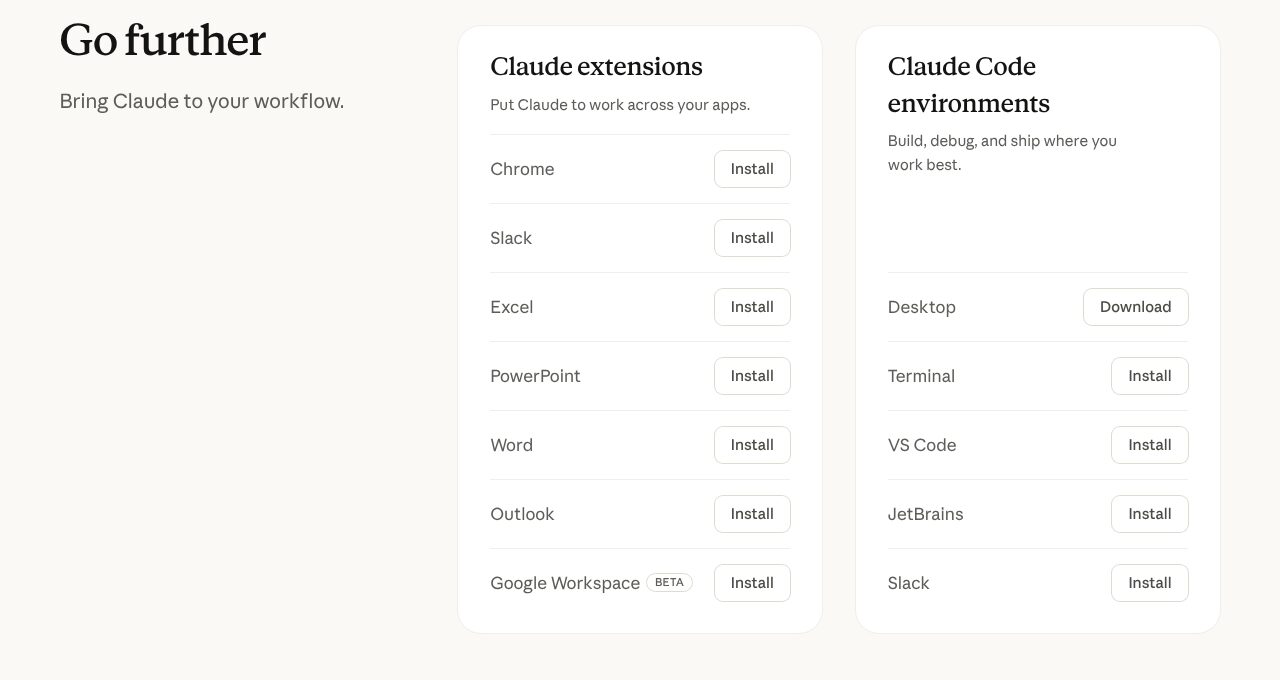
The downside of the Claude app is that it's harder to work with other tools, because like we've said, they want to suck you in. A lot of the work I need to do locally runs in a terminal setup, a mix of Codex and Claude threads, about 10 different agents on three different devices.
If you're not a developer, that looks like: where are the buttons? Why does it look like a terminal? This is confusing. You probably don't want that type of interface. Compare that to one thread with everything going on touching my website. That's all you need to see, and you can have 10 agents working at once. They just have to be cloud agents, or you have to know how to open a terminal.
Claude Code was in a terminal for me when I first started, a year, a year and a half ago. That was the only way to use it. I don't use it in a raw terminal ever now. Even if you're a marketer, a salesperson, a non-developer, there's probably a different interface for you in the Claude ecosystem that's more efficient and easier to use than the way you started, in the chat or in a terminal.
Ryan thinks the desktop apps are where most people will end up doing their work, because that's where the labs are pushing them. ChatGPT is pushing its desktop app too.
Don't let your AI tools own your work
Watch this part of the episode (41:55)
I'll probably sound like a broken record. My Claude Max subscription is the best bang for my buck of everything I pay for, including my power bill and my internet bill. At the same time, do not let your AI tools own your work. The whiteboards, the docs, the sheets, the slides, they're trying to suck you in, so the friction of churning is like, I can't do it, I'll pay the new rates.
Once they IPO, which I think they're going to do, it's going to change. We're on a honeymoon period with Claude. It's amazing.
I have my concerns about the company. I hate the watermarking. I hate the guardrails. When you're working on certain projects, you get a cybersecurity warning. They're the worst at that. Philosophically, I am not aligned with their mission. I'll just say that. But I give them money every month, and I'm happy to do it while I can. Just don't get sucked in while that's going on.
Ryan wants a future episode on what to do when we get rug pulled. He thinks asking whether we'll get rug pulled is the wrong question. It's when.
If you want help picking a Claude plan or setting up Code projects, book a 30-minute call, or follow me on X at @theaaron.