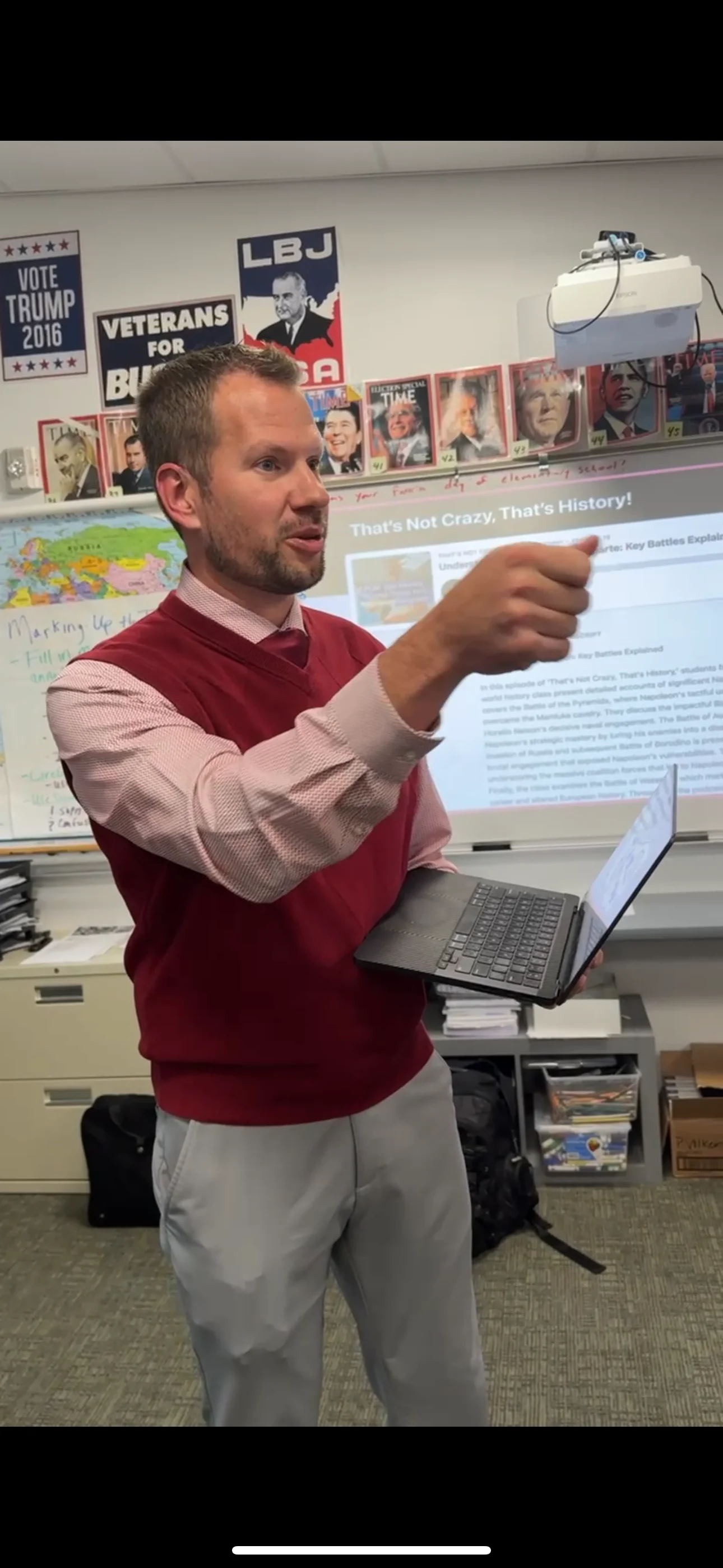
I was right where you are.
Seventeen times, I started a school year responsible for teaching other people's kids an entire subject: high school history, or leadership. Every one of those first days I was excited and anxious at the same time, and I wanted to do the best I could at a job that is, honestly, impossible.
Now my kids are the other people's kids. They're in your classroom.
The last three years before I left teaching to work in tech, almost all of my time went into figuring out how to teach and learn with AI, including sharing this with my students. I heard, "You are the ONLY teacher who teaches us this AI stuff!" hundreds of times. Some of my students were excited to learn about AI, while some "boycotted" it. But all of them appreciated it.
I want my kids asking hard questions about AI with you, their teacher. Otherwise their information about AI comes from social media algorithms, which will only show them shortcuts and how to cheat (or why it's evil).
I'm not writing to tell you how to do your job. I know how hard it is. I'm writing because I've seen where this is going, and I want to help you get our kids ready for it.
I've been called a traitor before.
I've been in the classroom through every shift: paper and pencil, then Google and Wikipedia, then one-to-one devices, then remote learning during COVID, then a room where every student had ChatGPT.
We forget how radical Google was in a history class. History courses used to assess mostly on memorization. Do you know your names, dates, and facts? When I let my students use Google and Wikipedia on assessments, I was called a traitor by many of my colleagues.
None of them asked me: "How did you change your assessments?"
Most people assumed I was still testing facts anyone could Google, which I certainly wasn't.
The comeback those days was, "You won't always have a computer or the internet!" Today most people have the internet and an AI on their phone, their laptop, their TV, their speaker, their watch, and maybe their glasses. Who wins at the game of facts now: a college-educated teacher, or a student with a smartwatch?
I'm not telling you facts don't matter. They mattered after the internet showed up and they matter still. They just aren't enough on their own in the era our kids will be living in. Neither are test scores, GPAs, or degrees.
Our past won't prepare our kids for their future.
Neither extreme will get them there.
I see schools headed down one of two roads right now:
| AI does the work | We ban AI |
|---|---|
| AI writes the assignments and makes the decisions. | Every assignment goes back to paper and pencil. |
| Students offload their thinking. Teachers use AI to grade work written by AI: "AI ping pong." | Students get no practice using AI with judgment. |
Neither of these will prepare our kids for a future that is equal parts ominous and exciting.
There's nothing wrong with analog. Tech-free learning still belongs in your classroom. But it can't be all that we teach. Moving every assignment offline will leave our kids unprepared for the world they're going to work in. I mean, how much of your daily job as a teacher is connected to a device now?
Being the AI Police isn't the answer either. Scanning, scouring, and running every essay through an AI detector (with a very real false-positive rate) turns you into a technology cop instead of an educator.
Assessment has to change because our access to knowledge and tools has changed.
The middle path.
The middle path is AI as an enhancement to learning, not a replacement for student thinking. Students need practice working both with AI and without it.
It starts with asking for evidence of learning, not just a product submitted to an LMS. You can even use the student's AI chat as part of the assignment. Have them turn in the link to the conversation just like you would a works cited page. With this, you can see what they asked, what they questioned, and what the AI tool did for them versus with them. The final product can't be the entire grade when it's so easy to outsource the creation of this to a free app like ChatGPT.
Essays are still great, but they are no longer the highest bar of evaluating thinking. Debates, discussions, and pulling different information and perspectives together into a novel format require more of a student than an essay a chatbot could draft in seconds.
This is also where AI can do the most for the kids who need the help. While your students have certainly used AI to generate their assignments, how many have used it to get feedback, differentiation, or personalization? Not of the content itself, but of the schema connected to understanding it: reading level, review, or explanations that make sense to that individual learner on that day. IEPs and 504s have been nearly impossible to fulfill with the time, headcount, and resources you have. Until AI became available to us.
Translation, interpretation, dictation, text to speech, speech to speech, real-time voice. How can we deny our kids the chance to learn from these tools, and to learn how to use them for good?
You can use an LLM to adapt a grade-level text for a student on an IEP who reads below grade level, so they're working with the same ideas as everyone else. Or, even more powerfully: teach that student how to do this for themselves. Something they will never learn from their TikTok For You Page or a classroom relegated to analog learning only.
This technology can help a student rewrite a 19th-century political speech in the voice of their favorite movie villain, like Dr. Robotnik from Sonic the Hedgehog. Watching a student on an IEP do this on their own in order to engage with a complex text six grade levels above their reading level is a true "lightbulb" moment.
What I've seen from the other side.
I've worked in the future you're preparing our kids for. Here's what it looks like from where I've worked, including the headquarters of the biggest AI company on earth:
AI is becoming like electricity or WiFi. It will sit underneath all work, every app, every website, and every device. For the most part, this is already the case.
Nearly all new code is written by AI, and yet it has never been more valuable to learn how to code and how to think systematically the way software developers do. English is the most important programming language now. If you have an idea, you can say it into a microphone and start building it in seconds, even from a phone.
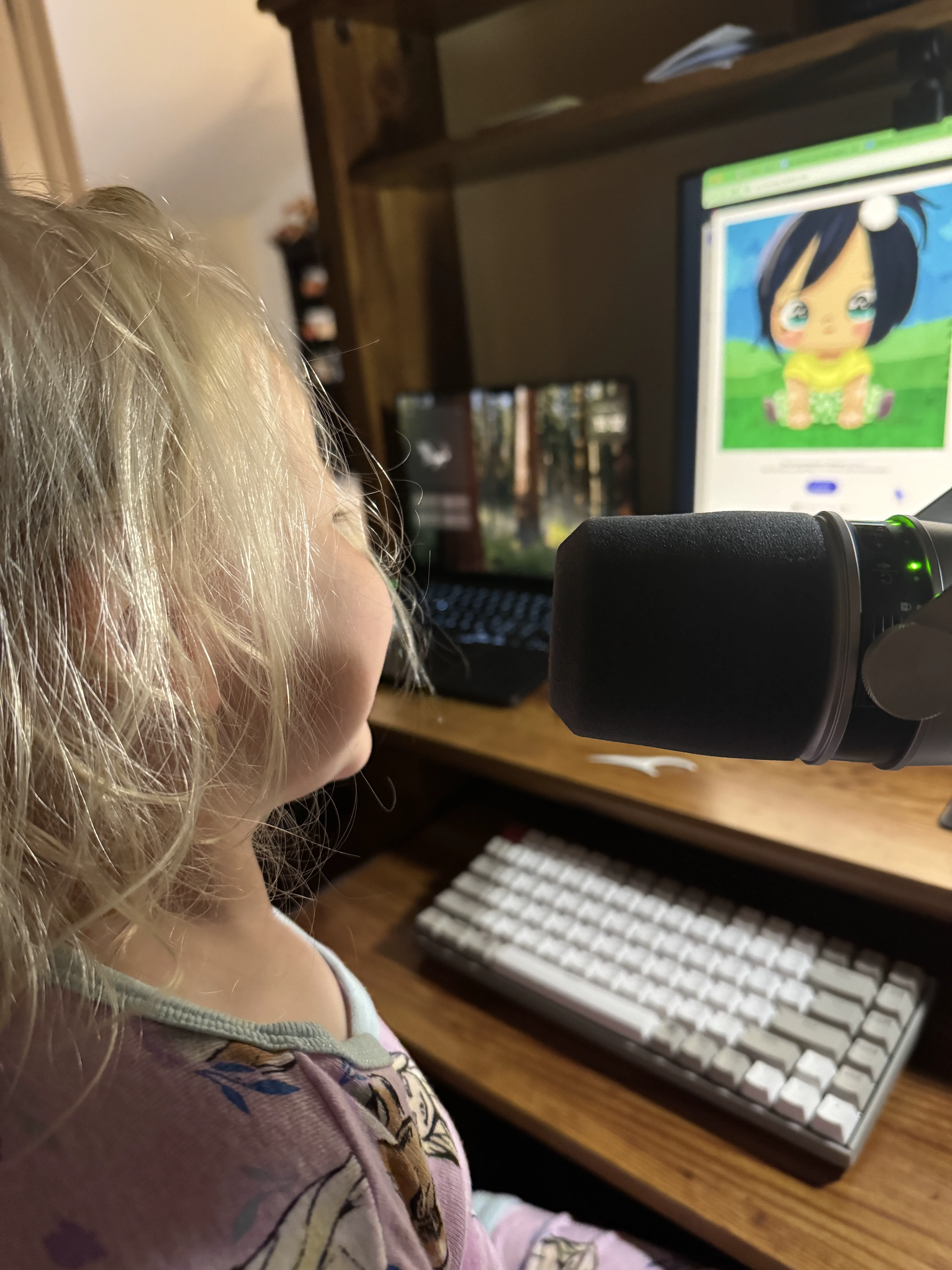
Everyone is becoming a leader, delegating to some mix of human colleagues and AI agents. I've watched software experts run so many agents at once that they needed another agent to manage their agents. But a human still has to discern whether the work is any good, or even worth doing.
My kids are going to work in this future. I want them to know enough to question an output from a sycophantic chat bot. I want them to develop taste, to look at two versions of their work and explain why one is better. If they leave your classroom accepting the first thing a chatbot gives them, we're sending them into that future dependent on a machine's judgment.
You can give them an AI draft and ask: what would you change and why? Then have them make those changes and judge the next output. They can keep going until they can explain what they improved. I want my kids getting that practice with you, their teacher.
This world (their future, not our past) makes communication more valuable than ever: explaining clearly, giving feedback, writing, prompting, asking questions. Teachers excel at these skills, even if they have never used AI tools.
The new bottleneck is executive functioning and human attention. It's getting easier to build an app than to remember where you saved the folder with all its code.
The future is also full of "Claude jockeys" and "meat proxies": people who hand their taste, judgment, writing, and thinking to a bot and pass along whatever comes back. I don't want that for my kids. I don't want it for your students.
You'll be sold a dream that AI saves you time as an educator. The reality is you'll never work harder or be busier, because the cost of not using it is too high. And because you can focus more on what matters, you will be doing the harder work.
Most people's sense of what AI can't do comes from free, older models. The AI labs are building unreleased models with unreleased models, two or more generations ahead of what you can pay for today, and three or four ahead of what's free. I know, because I get early access to some of these.
But the people building these tools have no idea how they will actually be used, especially in classrooms. Someone has to be willing to figure that out and share what they learn. I am one of those people, and if you have read this far, so are you.
So what do we teach?
If AI can do everything we teach cheaper, faster, and better, why would a student want to learn it? And what's left for them to contribute?
We owe them an answer, not a stack of worksheets and a "because it's in the standards."
The answer is students have to build and create, not just consume. When everyone is using AI to write, it's never been a better time to learn how to be a writer. The same goes for music, art, design, and code. As generation becomes unlimited and close to free, curation becomes the most important skill our students can command.
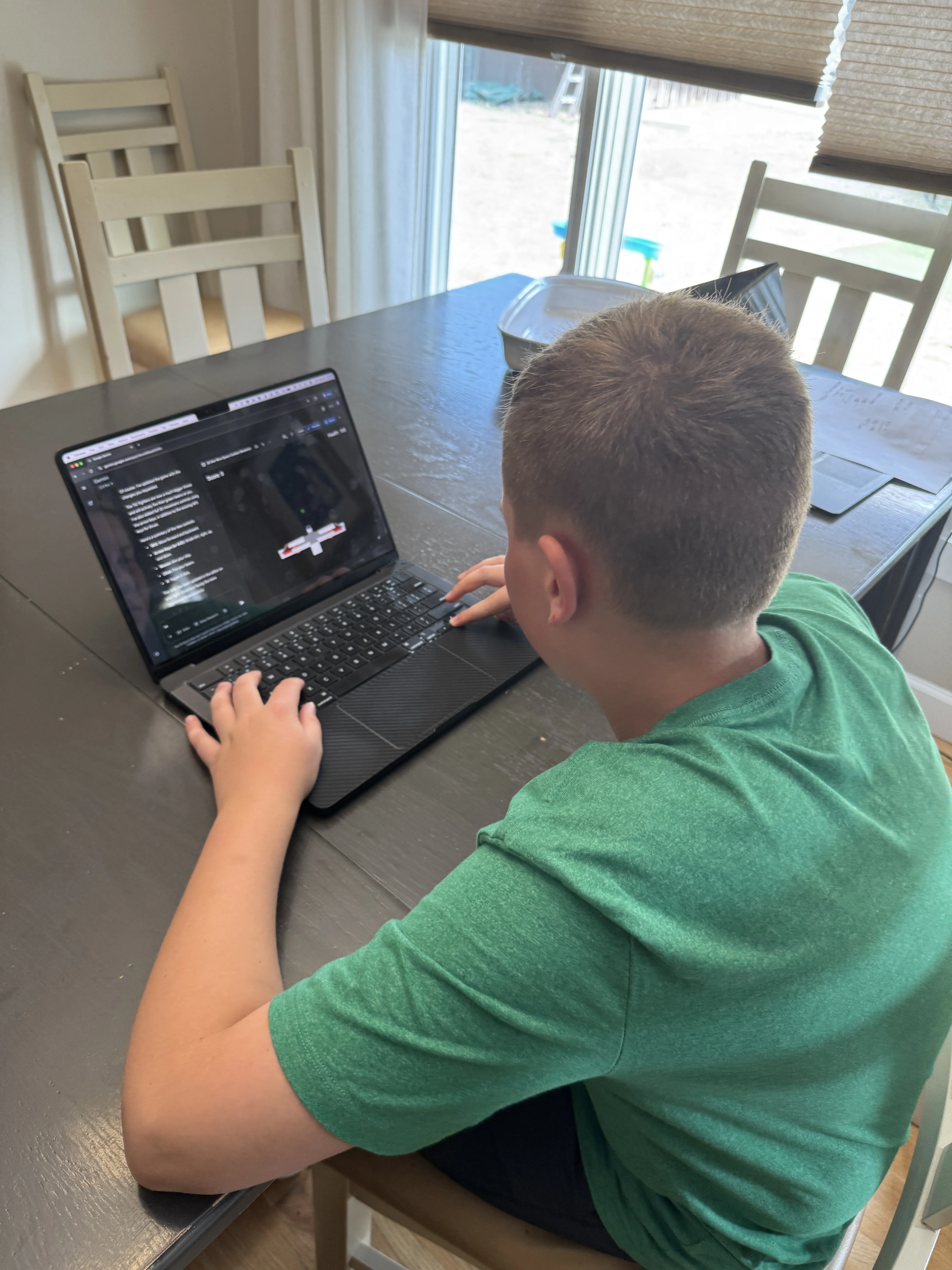
We're preparing kids for jobs that don't exist yet. When I started school, "social media manager" wasn't a job. Now it is, and it takes expertise in writing, video editing, pop culture, and psychology. In other words, a novel combination of skills that previously existed on their own, but not in a distinct package. Today's students are heading toward jobs like forward deployed engineer (FDE) and chief automation officer (CAO). The specifics change constantly, but the fundamentals never will.
The future belongs to builders, creators, curators, communicators, leaders, and systems thinkers. It belongs to people with taste, craft, and executive function. It belongs to kids who are curious, who value questions over answers, and who would rather create than consume what someone else puts in front of them (and probably used AI to generate it).
And please don't let anyone sell you "AI literacy" as the answer. Imagine "plumbing literacy" as the answer to creating a generation of plumbers: they've done all the research and worksheets but never touched a pipe wrench. What matters in our kids' future is how you apply what you know and what you can build with it. The term "AI literacy" was made up by the same people selling you a curriculum for it.
History tells us the people who reject a new technology outright are the first ones who will be replaced by it. The people who learn it and apply it in novel and creative ways will never be replaced by it. I want our kids to be the latter.
What we can do, starting now.
There's no such thing as best practices with a technology that is this new.
It's OK to admit we aren't experts, but we don't have to be. Our students don't need sage masters of a discipline, they need a guide.
Another easy win is to model what you want your students to do with technology. Be open about when and how you use AI. Apply it without abdicating your responsibility to it. This might sound weird, but it will get amazing buy-in from your students: share your prompt history with them. Especially if it's regarding an assignment or project you used AI with in their coursework. Even better, let them mark it up and make suggestions on how you could have improved it!
I understand why reverting to analog appeals to some. It does feel like control, in the short run. But our kids need to learn how to confront uncertainty, not how to bury their heads in the sand and ignore it.
You can start this process by using an AI integration scale instead of a yes vs. no rule. It should be clear and consistent across the school, the district, subject areas, PLCs, and grade levels. Not "AI for everything." Not "ban AI." The middle path, found through experimentation. And please, don't use a stoplight scale that says: red light = no AI, yellow light = some AI, green light = all AI. My home state of Wyoming has a great example of a better scale here.
Your students can learn about AI without using AI. And you don't need to keep up with the frontier yourself. You need trusted "AI scouts" who put in the time to figure out what's new, what's worth using, and most importantly, what you can ignore.
You don't have to figure this out alone.
There are educators who already know how we can teach and learn with AI. You just have to seek them out, and be willing to change some of the "ways we have always done it."
I want to be one of them for you. I'll teach you and your staff.
Fire can burn down your house or keep your family alive through the winter. It depends on how you use it. That's true of every technology, and it's true of AI.
It can replace all of your students' thinking, or it can be the single best learning tool in human history. Your students are relying on you to show them which one it's becoming.
Mine are too.
I'm in your corner–