Field notes
Astra vs Fable: why I'm still paying for ChatGPT
· 9 min read
GPT-6 Astra · Claude Fable 5.1 · AI Rabbit Holes · AI for marketing

I've used Fable 5.1 for long-form writing where I could immediately tell it did a better job than Astra, but that improvement hasn't been enough for me to pay for a Claude subscription.
I gave both models the same PDF, 17 scanned pages of my handwritten ideas, and Fable had the better hook and did a better job organizing the writing, but Astra did the entire job faster than Fable could even read the PDF.
I prefer Claude Fable 5.1's writing and still get more work done with GPT-6 Astra. How often do I need that extra bit of quality, and what am I giving up to get it?
I talked through that with Ryan Doser on AI Rabbit Holes on September 15, 2026. Ryan had been testing both models on websites, and I had been using them for writing and the other work I need to get done during the week.

Where Fable 5.1 earned the extra time
The writing task had a few places to go wrong before the model even got to the writing. It had to read a scanned PDF, pull the words out of my handwriting, and turn those ideas into a long-form piece without inventing a bunch of slop.
I gave Fable the PDF through Cursor and used the same prompt with Astra in ChatGPT, asking both to turn my handwritten ideas into a piece of writing that stayed true to what I'd actually said.
Fable took a long time and made a lot of tool calls just to read the PDF, but when I opened the result, I could see why I'd use it as a copywriting coach. I hadn't given it a hook, just a pile of thoughts I wanted help structuring, and it did a much better job of figuring out how to put them together.
Even though I'm biased toward Astra because I pay for ChatGPT, I'd still pick Fable's draft in a blind test.
Astra got through the PDF without getting stuck, and its writing had more personality than I'd come to expect from GPT. If I have one piece where I really need help with the hook and structure, I might reach for Fable, but if I'm doing ten of these in a day, the extra waiting becomes a much bigger part of the decision.
Ryan's landing page test: fancy doesn't sell
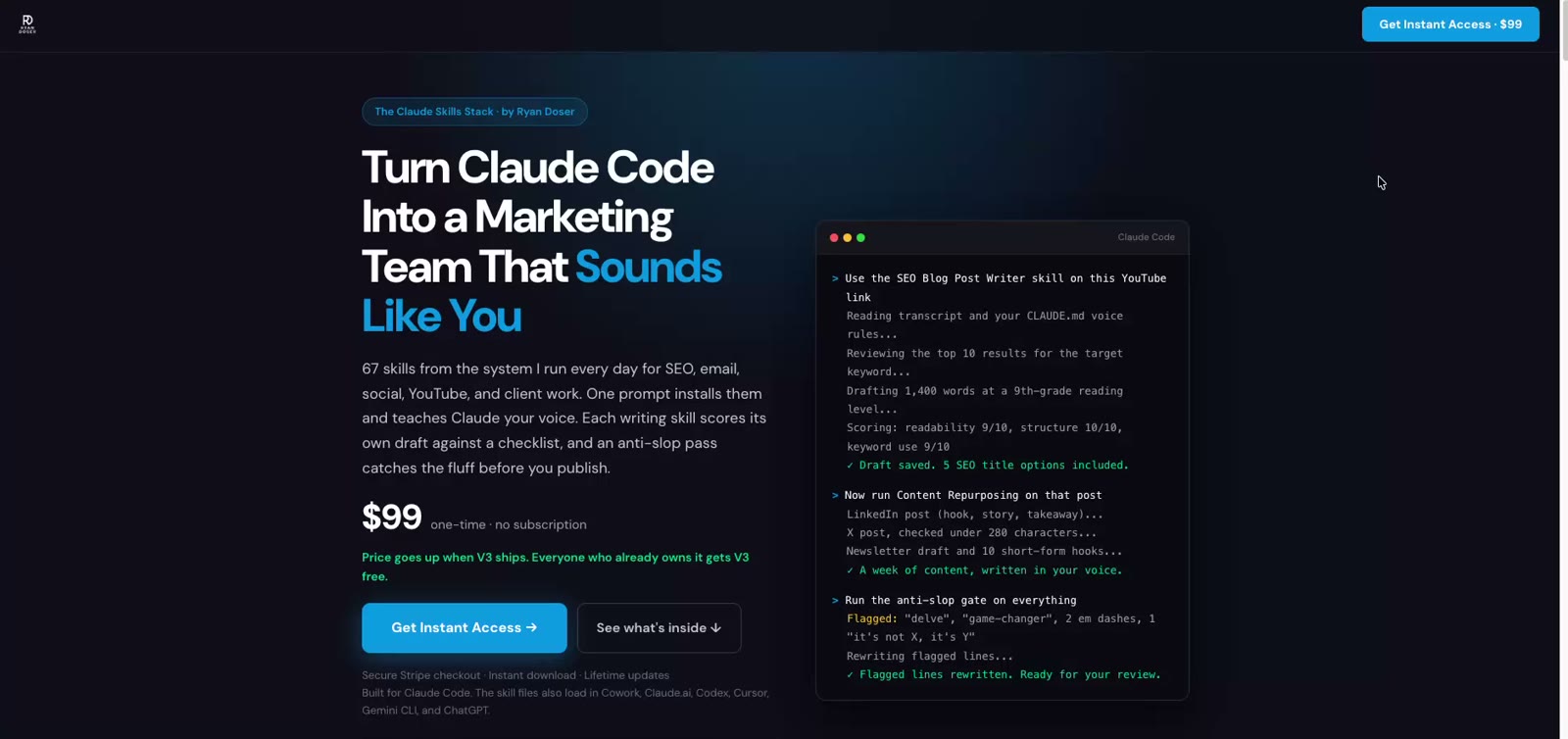
Ryan gave both models his existing landing page and asked for a better version designed to get more conversions. He hadn't specifically told either model to stay on brand.
Fable stayed close to the page he already had, keeping the dark background and blue accents while making the purchase buttons stand out more. The testimonials also looked a little better to me, but overall it was an iteration of the existing design.
Astra changed the colors and put Ryan's name at the top, then used a different widget to show what the product does. The page was shorter and more direct, which I actually liked even though it had gone off brand.
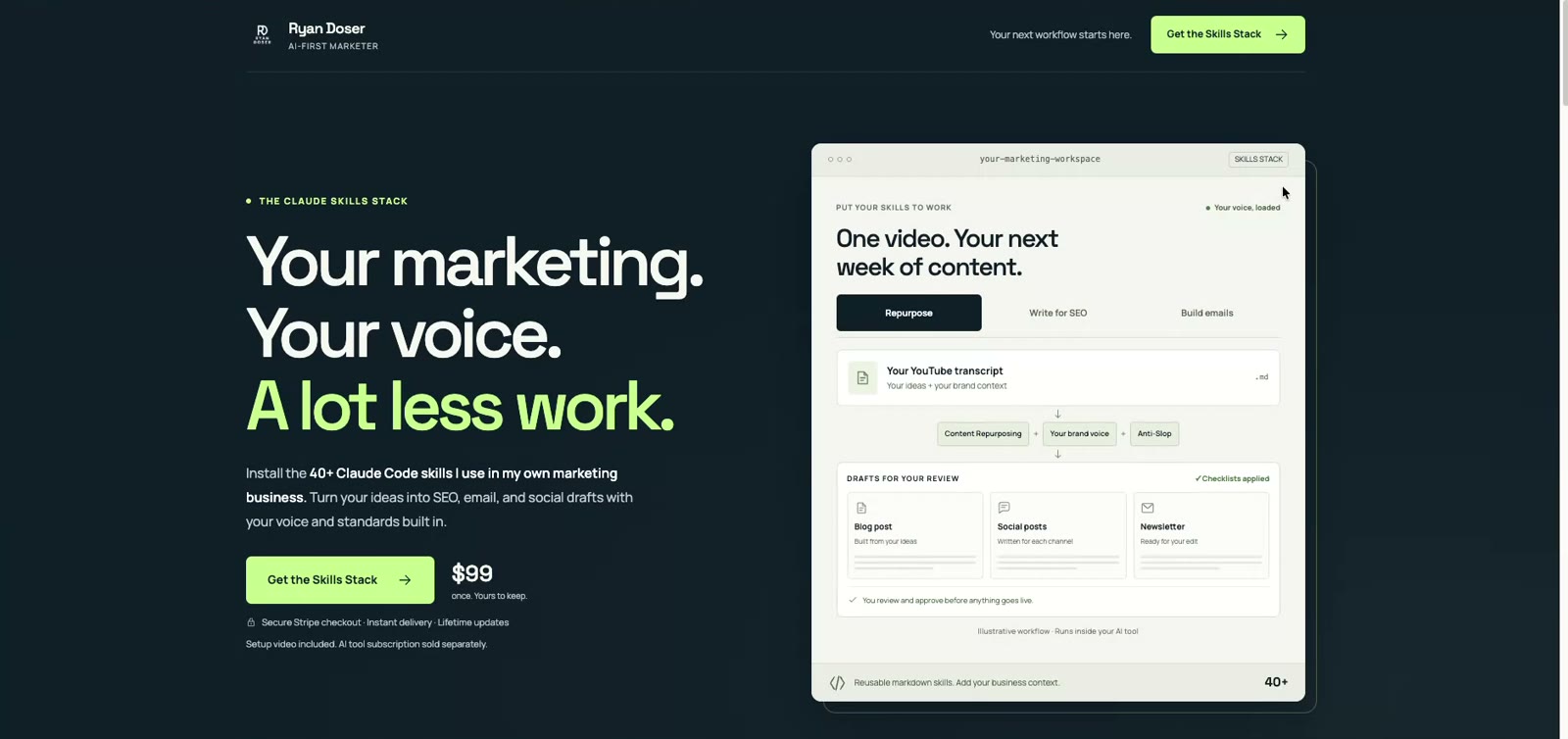
My gut reaction was that Astra's version would probably perform better because it was easier to understand the offer and know where to click. Ryan would have to test that, but I thought the simpler version was worth putting in front of customers.
With a landing page, I want someone to understand what they're buying and know where to click without having to work through a bunch of design. Ryan made the same point about a plumber in Des Moines: the business owner cares whether someone fills out the form and becomes a lead. A fancy page doesn't help much if it gets in the way of that.
Astra gave Ryan more of the business he asked for
The second test started with a local service business idea: flooded-basement cleanup in Des Moines, Iowa. Ryan asked for a company name, an ideal customer profile, a brand guide, and a homepage design. He supplied a reference website and a skill.
Ryan had Claude Code and Codex running inside VS Code, so he could give them the same prompt from the workspace he already uses. He didn't need to switch between two desktop apps to do the comparison.
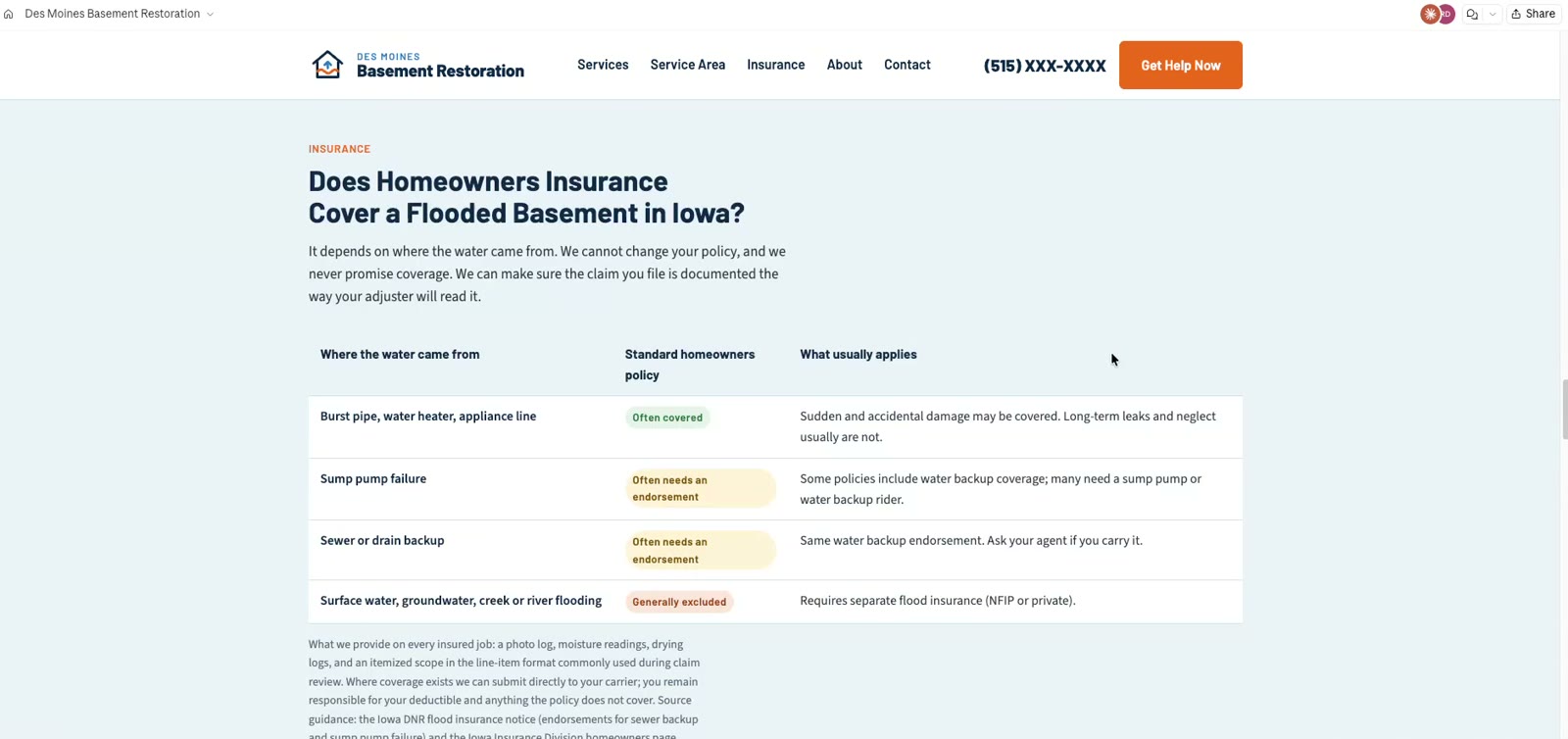
Fable's result looked rudimentary to me, with orange text that was hard to read and five steps packed in beside the headline. Farther down, the colored labels in the insurance section had awkward spacing. If I'm paying for a Max plan, those are things I'd expect it to get right without having to go back and ask for fixes.
Astra gave him a brand concept with a separate guide and a homepage. The colors felt more considered to me, and the orange it chose for actions actually carried through to the buttons. It also used image generation to fill in the page.
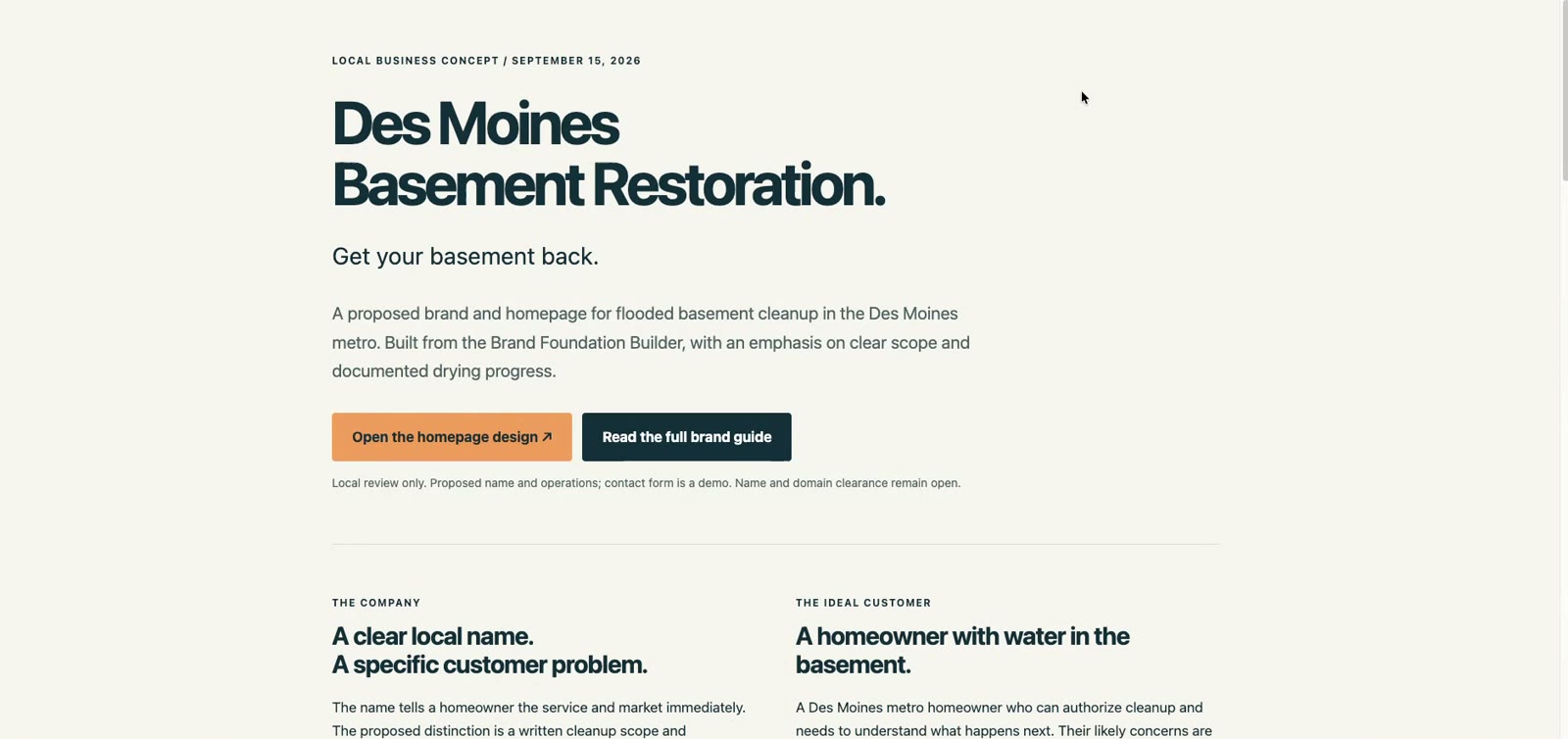
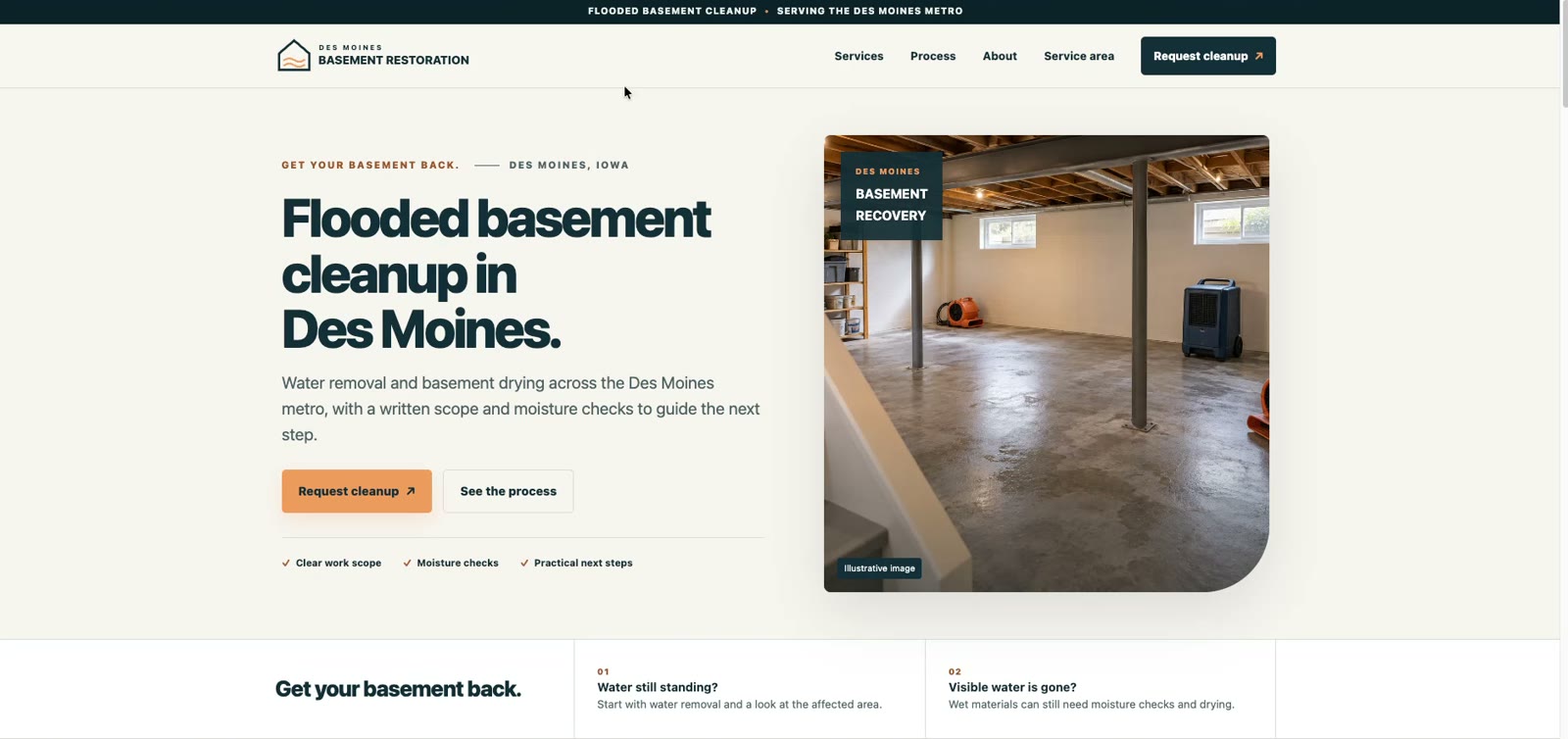
What stood out to me was how much Astra filled in on its own, including using the image generator without Ryan having to ask for it separately. Ryan has built a site he likes with Claude too, but in this comparison, Astra gave him more of what he'd need to keep building the business.
I care what it costs to finish the job
I'm not paying for a direct Anthropic subscription. I access its models through tools such as Cursor and OpenRouter. At the time we recorded, I was still on my existing $200 ChatGPT Pro plan. Ryan was comparing his $100 ChatGPT Pro and $100 Claude Max subscriptions.
One correction to our conversation: standard API pricing is the same for these two models, $10 per million input tokens and $50 per million output tokens. That is what OpenAI lists for Astra and Anthropic lists for Fable 5.1. App subscriptions and third-party credits are different billing systems.
The total cost of a task still depends on how much the model uses to finish it. A higher price per token doesn't automatically mean a more expensive finished page, and the same token price doesn't guarantee the same bill.
The subscription limits also matter to me. Claude's pricing page lists Fable usage at 50% of weekly limits on Max. That specifically limits how much of the weekly allowance can go to Fable. OpenAI says new $200 Pro sign-ups are temporarily paused, while existing subscriptions continue. These are the plan details I checked for September 15, 2026.
I also overstated it when I talked about having no limit on Astra. Astra has usage limits, and the app and plan matter. My preference is about the work I can get through with my subscription.
The best model isn't doing all my work
I use GPT-5.6 Luna as much as any model. If the task is moving information around or doing straightforward work, I don't need Fable or Astra for every step.
Ryan uses GPT-5.6 Sol to check work produced by other models. For a high-value task, he may use Astra for that final check. My addition was that the checking model needs the skills and context to know what we care about. Otherwise, we're explaining ourselves again every time.
That's the same reason I keep my instructions outside a single app, which I wrote about in my Grok Bot review. I want to carry the way I work with me when I switch tools.
A privacy correction worth making
I was too broad in the recording when I talked about Anthropic keeping data and turning training off in ChatGPT. Training and retention are separate questions.
ChatGPT lets consumer users opt out of training, and Anthropic gives consumer users a training choice. Their API and business products generally don't train on customer content by default. That doesn't mean nothing is retained. Anthropic has specific retention requirements for covered models such as Fable 5.1. OpenAI also describes retention separately from training in its API data controls. The rules of the app or intermediary I'm using matter too.
I still care where my private thoughts and ideas go. I just shouldn't treat a training toggle as a promise that nothing is saved.
Common questions about Astra and Fable
Is GPT-6 Astra or Claude Fable 5.1 better for writing?
I preferred Fable 5.1's hook and structure when I gave both models 17 scanned pages of my handwritten ideas. Astra still produced good writing and finished the whole job much faster, so I'd use Fable when that extra help with the writing is worth the wait.
Which model did better on the website tests?
In Ryan's tests, Fable stayed closer to his existing landing page's branding, while Astra made a shorter page that I thought was worth testing with customers. For the basement-cleanup business, Astra gave him a brand concept and guide along with the homepage and a generated image. I preferred that result, but we hadn't measured which page converted better.
Should I choose ChatGPT Pro or Claude Max?
If I'm recommending one subscription, I'd choose ChatGPT Pro. Fable's writing can be better, but I get more work done for my money with OpenAI's models and tools. That makes ChatGPT Pro the better value for how I work.
Do Astra and Fable have different API prices?
At the September 15 comparison, both listed standard API rates of $10 per million input tokens and $50 per million output tokens. The cost of finishing a task can still differ because the models may use different amounts of tokens. Those rates are separate from a ChatGPT Pro or Claude Max subscription.
Do I need Astra or Fable for every task?
I use GPT-5.6 Luna as much as any model because straightforward work doesn't always need the most expensive option. Ryan uses GPT-5.6 Sol to check other models' work and may use Astra for a higher-value task. I want the model doing that check to already have my skills and context.
OpenAI is doing a better job of marketing this
I also think OpenAI is doing a better job of winning over the average person with its marketing on Twitter, LinkedIn, and Instagram, along with things like the box of Astra hats they sent me. Most people aren't comparing models the way Ryan and I are; they know which commercial was cooler or which ad got them to click. Right now, it feels like OpenAI has the momentum there too.
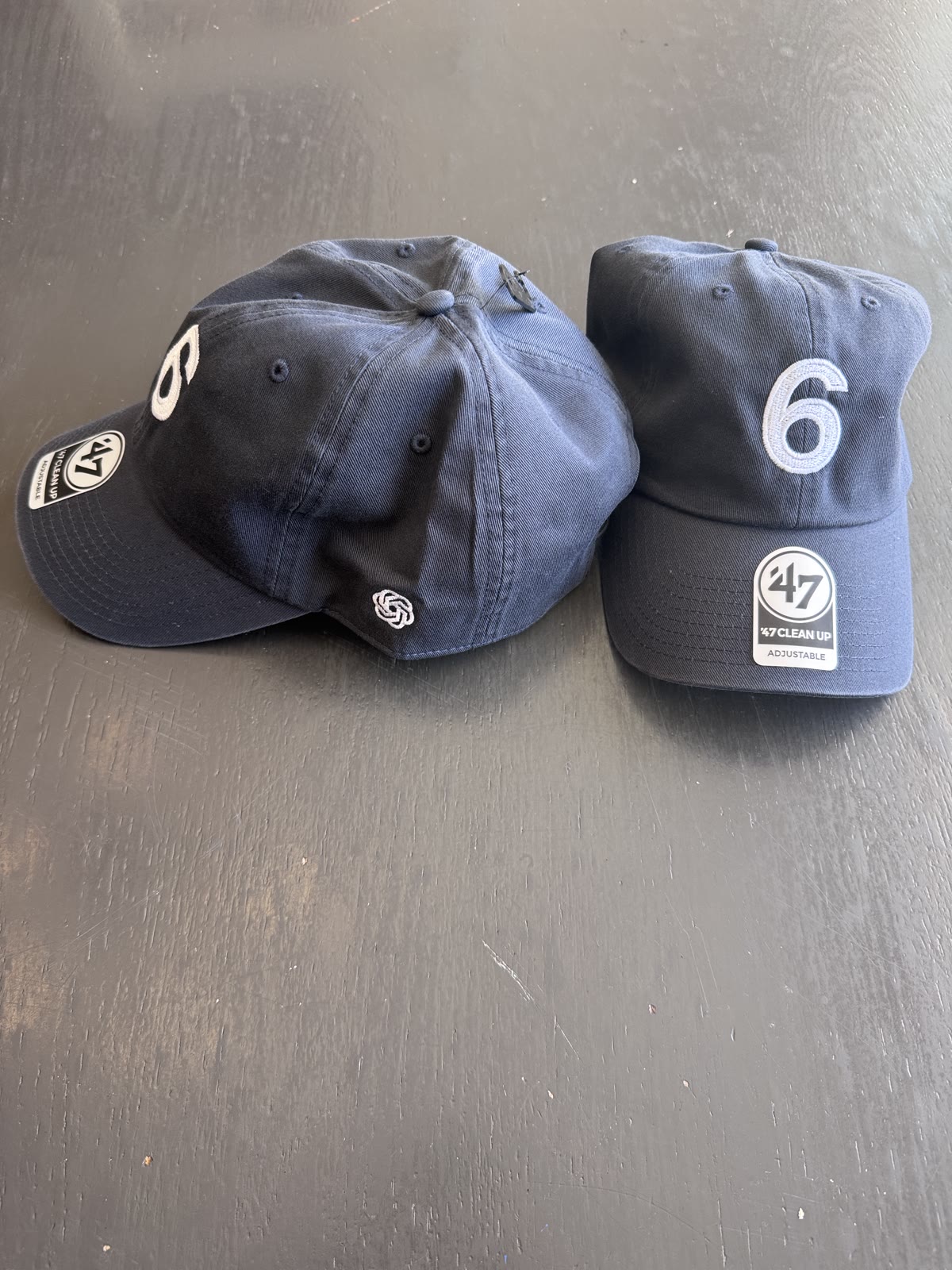
Ultimately, OpenAI's subscriptions are a better value for the work I need to get done, even though Fable is better at some of it. If someone is only choosing one subscription, I'd tell them to choose ChatGPT Pro over Claude Max because they can get more done for their money.